Some people are used to viewing astrology as nothing more than 12 Zodiac signs that just seem too vague to really say anything about a person. But when you get past the surface level, you find out that there’s a lot more going on underneath.
Every individual has a unique astrological imprint. A handful of signs in their astrology which all interact in differing ways to reveal character. You can also learn about useful information about your life beyond just character.
But things get even more complicated when you find out that there are many different schools of astrology. Most are based around the period when they were practiced, and the culture that practiced it.
Others traditions have certain philosophical or spiritual beliefs that underlie their approach.
Originally this was going to be a top five article where I ranked different types of astrology, but I realized that that would cause undo division and that doesn’t even make sense. Why? Because each type of astrology brings something valuable to the table.
Even the approaches you or I don’t use might have some insight unique to their perspective that we can integrate to become better astrologers and better people.
So without further ado, let’s explore what gems of insight each of the varying forms of astrology can bring. I’ll present them in a loose chronological order, mostly to help you get a sense of the big picture of the practice and how it developed and diverged.
Ancient Ancient Astrology
I know I’m starting in a place that I’ve given kind of a funny name, but it is appropriate. When most people here think of ancient astrology, they think ancient Greco-Roman astrology, or maybe they think Indian astrology. But what I’m referring to here is this form of astrology that appeared right before Hellenistic or Greco-Roman astrology.
What we consider to be astrology, which uses horoscope and focuses on the ascendant as its central component, wasn’t fully developed until the 1st and 2nd century CE.
Before that, there were some texts attributed to quasi mythical Egyptian figures who called themselves Nechepso and Petosiris. Before then, (and perhaps concurrently with them, as I’m not sure to what degree they overlap) there were two main cultures who practiced astrology.
Both cultures were known to dabble in things like astrology in sources as ancient as the Hebrew Bible. That would be the Egyptians and the Babylonians.

Though, it was the entire region around Babylon that was known for its astrology, and that’s why it’s typically called Mesopotamia in astrology by scholars and astrologers alike.
Egyptian Astrology
It seemed that the Egyptians used a combination of techniques that aren’t very popular anymore, but which we still know about.
Those being the decans (which became known as the faces as well) and the planetary hours. In Chris Brennan’s book, Hellenistic Astrology, he states that the decans could have been a precursor to either the houses or the Zodiac itself. Either way, they had a whole system based around observing the decans, it even had people whose job it was to observe them, when they rose, and more.
The decans might have been attached to fixed stars as they came up the horizon. The Egyptians no doubt also examined what decan a planet was in, and made interpretations based off of it.
There is a lot a mystery in Egyptian astrology, but all the way into Persian astrological texts (roughly around 700-1000 CE), it is mentioned as a distinct perspective, alongside Indian astrology and others. This suggests that it may have been seen as different from the rest of western or Hellenistic astrology.
Mesopotamian Astrology
Babylonian or Mesopotamian astrology seems to be the source of the modern Zodiac. 12 was an important and overall just practical number for them.
We actually get a lot of our modern time keeping numbers from Babylon. What do I mean by that? Think about it. The idea that there should be 60 seconds in a minute 60 minutes in an hour an 12 hours in half a day all comes from Babylonian time keeping.
This focus on twelves and multiples of 6 appears to primarily come from their culture. Why? Well, these numbers are easy to divide. 6 can be divided by 3 and 2. 12 can be divided by 1, 2, 3, 4, 6, and of course 12. That means that they’re very practical numbers to work with, and we see this play out clearly in astrology.
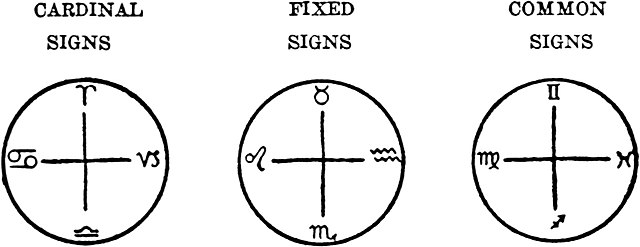
The 12 signs are divided into 4 elements and 3 modalities. They’re also divided into two genders, and the aspects include the sextile or hexagon, which could divide the Zodiac into 6, having 6 points.
So Babylon may be the source of the zodiac. It may also be the source of the exaltation scheme, and possibly the concept of houses.
Though, it’s unclear where exactly the notion of houses came from, Babylon was a hotbed of divination. I personally consider astrology to be a series of fairly rational techniques with a philosophical foundation, and thus a sort of old-fashioned science. Not modern science in the sense of studies and degrees, but the old term of science in the sense of a technical and organized study of a form of knowledge. But some people add other elements and perceptions to astrology.
Babylon combined astrology with a divinatory practice. But it was an ancient practice that was seen by other cultures (and themselves) as dangerous. They had an addon which they (and their neighbors) claimed allowed them to know exact details about a person. According to some sources, they used divination in a dangerous practice that included mixing divination with astrology, in order to get hauntingly specific even fatalistic conclusions. It seems like it’s based on the astrology, but is actually based on the strange practices that went on at the time.. I talk about this more in my article on spiritual principles of astrology. In that article, I talk about how astrology can work with or work against an individuals principles, and how to make sure you do it in a way that’s safe for you and in line with your values.
Back to Mesopotamia. Babylonian forms of divination were not limited to just this one. It was widespread in their culture, and it used in many different ways. One that is relevant to astrology was something scholars called hepatomancy.
This was the idea that, and it sounds a little nonsensical, but it’s the notion that you could cut open a liver and look at the dark spots or other markers to interpret something about what’s going on in the world. There were philosophical justifications for how it made sense to the Babylonians.
The Babylonians used a concept for this where they overlaid a circle, and divided it into 16 slices. Each of those regions was associated with a different concept.
Anyone who knows astrology would recognize that as being very similar to the notion of astrological houses. The main difference being that instead of projecting this circle with divisions over a carcass, you simply look toward the sky and impose the order there.
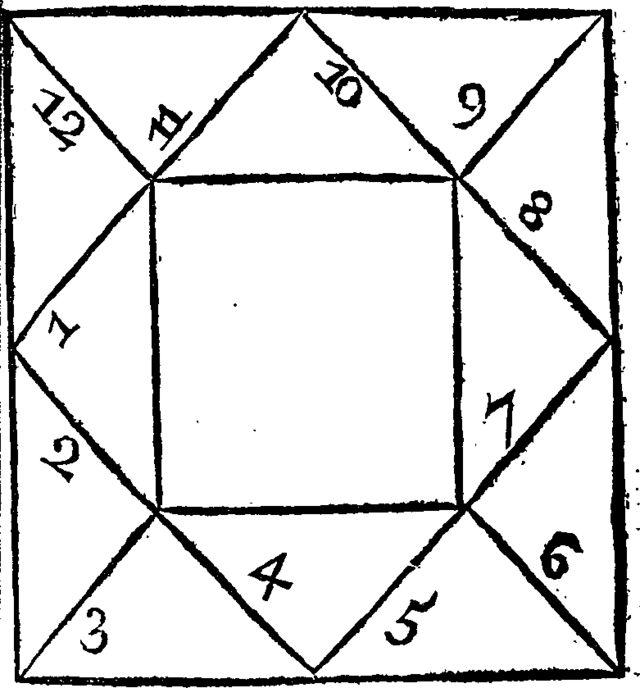
Now very few astrologers are aware of this possible connection, so it’s unclear to me weather this method, this tool that was used by the Babylonians, did or did not get transferred to use in astrology. I’ve seen this concept explored briefly in one book, and I haven’t seen it anywhere else.
Since this is the tradition that strongly attached to the number 12, it seems quite possible that the 12 houses could have come from it.
Or maybe astrologers closer to the beginning of Hellenistic astrology took this concept from Mesopotamia culture and combined it with concepts from the Egyptian decans and maybe the planetary hours, and synthesized them into what we now know as house systems.
For now, I can always speculate, though I am getting a little interested in the idea of peering into the historical scholarship on this and saying what’s there to be discovered.
What can we learn from Egyptian and Mesopotamian Astrology? What did they contribute to our Astrology?
There are a lot of surviving techniques from these two ancient-ancient astrological traditions.
We have from Egypt the now minor concepts of decans and planetary hours. (Both are used extensively by certain later traditions, however.)
From Mesopotamia, or Babylon, we have the widely used concept of exaltation. We also may have gotten the zodiac and the houses from them.
The bridge between these two forms of astrology and the beginning of something more recognizable in Hellenistic astrology, are the two astrologers mentioned at the beginning of this section. These are the proto Hellenistic astrologers, Nechepso and Petosiris.
The Beginning of Hellenistic and Horoscopic Astrology
The scholarship indicates that writings by authors claiming to be Petosiris and Nechepso are the bridge from ancient-ancient to Hellenistic. Their writing provided clues towards a form of astrology that was more complex than what came before, and seemed to combine both into a bigger system.
Most of the writing of these two mysterious astrologers is lost. However, they are referenced by the early Hellenistic astrologers whose work did survive.
Sometimes, the writings of Nechepso and Petosiris are quoted by Hellenistic authors like Vettius Valens. It appears these two shared their astrological insights not only in code, but in also in poetic verse.
The Hellenistic astrologers learned some of their practice through astrological poetry.
Was this normal?
Writing educational work in poetry was not uncommon in the ancient Greek world, though it was also not standard.
Poetry was usually used for fiction, legends, myths, while prose was for non-fiction. Aristotle and Plato, for example, wrote in dialogue or regular prose. So this approach is not unwarranted, but still a little unusual.
Because these two appear to be the strongest starting point for Hellenistic astrology, I will talk about them further in the next article on Greco-Roman, Hellenistic, and Indian astrology.
Thanks for reading, this has been your literary astrologer,
DT.
Leave a Reply