From my perspective, it’s best to “aim for the stars” even if you will never reach them due to an ever receding horizon. I take a different approach than some.
Part of my Journey
I spent years in university honing my analysis skills, as well as surviving successively tightening years in the creative writing classes. It was portfolio entry, and each year the class size got smaller.
I have also published and over time developed a critical eye that I use when editing my own work. I can usually (though obviously not always) see when chapters aren’t working and also thankfully, when they’re better than I expected. As of right now, I would say that out of 50 chapters in this project, only a handful of scenes get anywhere near the ideal I wish to develop. And even then, those scenes are still roughly 70% toward where I think they might be able to reach.
Traditional Publishing and Independent Publishing Compared.
I think after a handful of novels, I might be ready to test traditional publishing and an agent. That said, traditionally published writers might make more sales, but make significantly less money. Most receive a small advance and never write full time.
Going the independent publishing route nets writers 4-5x the income per book, and since they don’t advertise unless you are already successful, I would likely sell a similar amount.
For now, own a corporation and use it to publish my works. I consider myself a business owner as well as an author. Additionally, I have my university degree.
I have other concerns… ∴ traditionally publishing with a tiny advance is almost irresponsible.
I am a husband and father. I incorporated five years ago, though only published one book to test the waters so far.
I have a lot of life to draw from, as well as the novels I appreciate, both classic authors such as Tolstoy, Austen, and Faulkner, as well as more recent authors, such as Connelly and Crichton.
I really like the idea of traditional publishing, the romantic vision of just writing, and leaving the editing and promotion to the publisher.
But it doesn’t work like than anymore. That was kind of a bubble, to be honest. Nowadays, they expect a well edited and well polished novel, and don’t promote anything except what is already successful.
You end up doing most of the same work. The real difference is that publishers will pay the publishing cost and give you a small advance…which once again is on average $5000.
I would need to publish like 10 books a year to make a living with that! But wait, they wouldn’t let you…publishers rarely want more than a book a year from an author.
Then, someone asked if I was trying to write the next great American novel. I’ve heard of this phenomenon, apparently this is a writing goal that some Americans aspire to…at least, certain people within the USA have this goal.
Though, it’s unfortunately become a bit of a meme, and more seen as evidence of lack of perspective than of having high aspirations. (Could it by my “shoot for the stars” comment that prompted this person’s question?)
Hold on now…
But wait — I’m not American
Someone online once warned me about trying to write the “next great American novel.” This confused me a little, so here is my response to that idea, based on my perspective as…someone who is not even from America.
I have respect for some American authors, such as Twain and others. William Faulkner’s short stories leave a strong effect, and the opaque prose that issues from me naturally when my neuroticism is high enough does remind me at times of Faulkner. What I do with that realization is study Faulkner, not conclude that I have succeeded and will be the next great Modernist.
But is that even what people are talking about? I don’t really know, but here is, allegedly, the source of the term.
In 1868, John William De Forest wrote an essay called “The Great American Novel,” and this is apparently the origin of the term1. In it, he defined the term as,
“[T]he picture of the ordinary emotions and manners of American existence.”
John William de Forest 1
This is interesting, but again, I’ve never lived there, so it would be difficult for me to actually accomplish. I have gotten the notion that this is a bit of a phenomenon in the US though, and maybe it is worth exploring in another article, perhaps on that explores perspective and aspiration in general.
That said,
I did visit it whilst courting my American wife, and I really appreciated the wonderful southern public parks and 24 hour breakfast food places. …Even if we did hear coyotes as the sun went down during our walk.
Spooky! I actually have zero experience with coyotes in Canada. I wonder if they go that far north? Regardless, we went home pretty fast haha.
All of this is to say that, perhaps because I am not from the USA (rather, I am Canadian), I do not understand the American drive to write “the next great American novel.” I am simply trying to write and refine my own fiction.
Identifying Flaws in My Own Writing.
I do have major problems in my writing. For example working with character flaws, something so core to literature, is a weakness of mine. I tend not to truly understand a character enough to write them well until I’ve written about half the book.
And that means the first half is basically in need of a major edit, or worse, to hit the cutting room floor and be rewritten.
But I was only able to discover these holes in my skills by writing, and really only after the first five years and 150 000+ words of effort.
Quality comes from Quantity—and Quantity is Necessary to Make a Living.
There is that saying, that the first million words are practice. Maybe it’s hyperbole, but I think I’ve seen through my own experience that there is something to it.
“The First Million Words are Practice”
(No one knows who coined this, it’s been attributed to many authors, some of whom actually said it, and some of whom never have.)2
But there’s something mind-blowing that helps put it all in perspective. If we want to make a real living writing fiction, we can’t afford to hyperfixate on one book. Certainly not our fist.
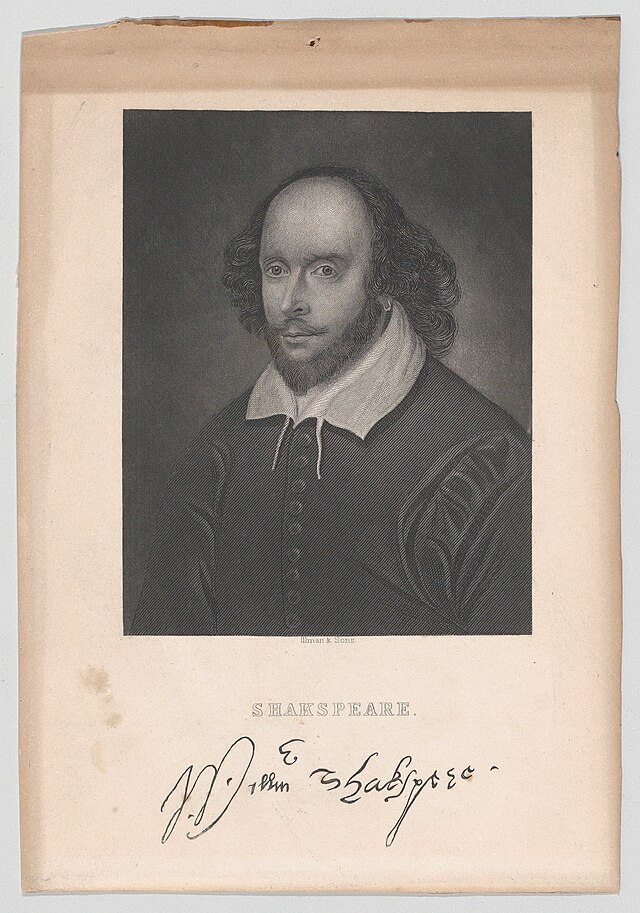

Mid-19th century steel engraving7
(He did not author this quote, but he did write nearly a million words!)
I think I can understand people’s warnings because I believe I have been somewhere similar. This state of hesitancy and worry.
But that isn’t the solution to writing and publishing, clearly so.
There is a paradox in creative endeavours.
People assume that great writing is quality over quality, but it isn’t true.
The best writers have written hundreds of thousands of words, and have published extensively.
Quality comes from focused and careful quantity.
You can’t afford to constantly worry and rewrite one book if you want to make a living writing novels. You need to write many many works.
You can’t afford not to write prolifically if you want to write a high quality work. You must write your heart out, and take care to write well as well as often.
_(cropped).jpg)
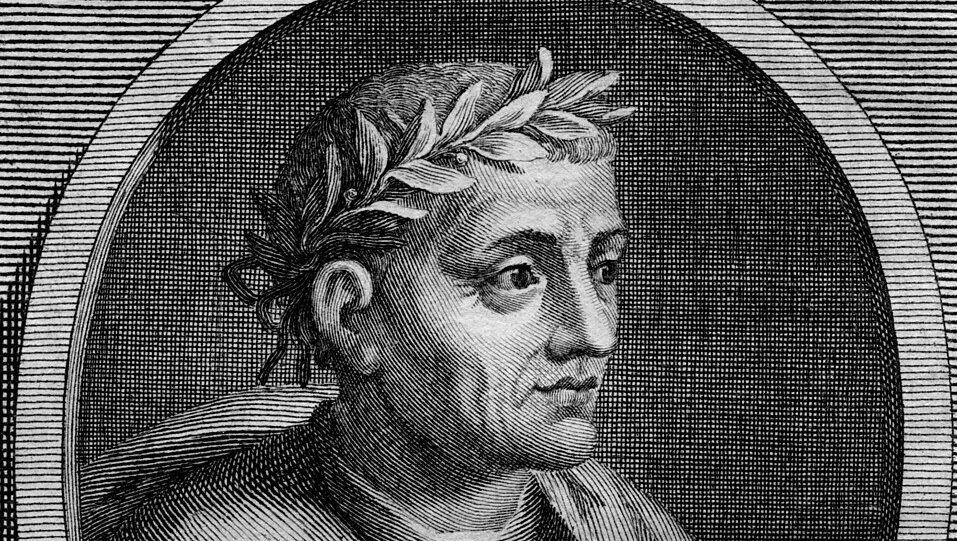
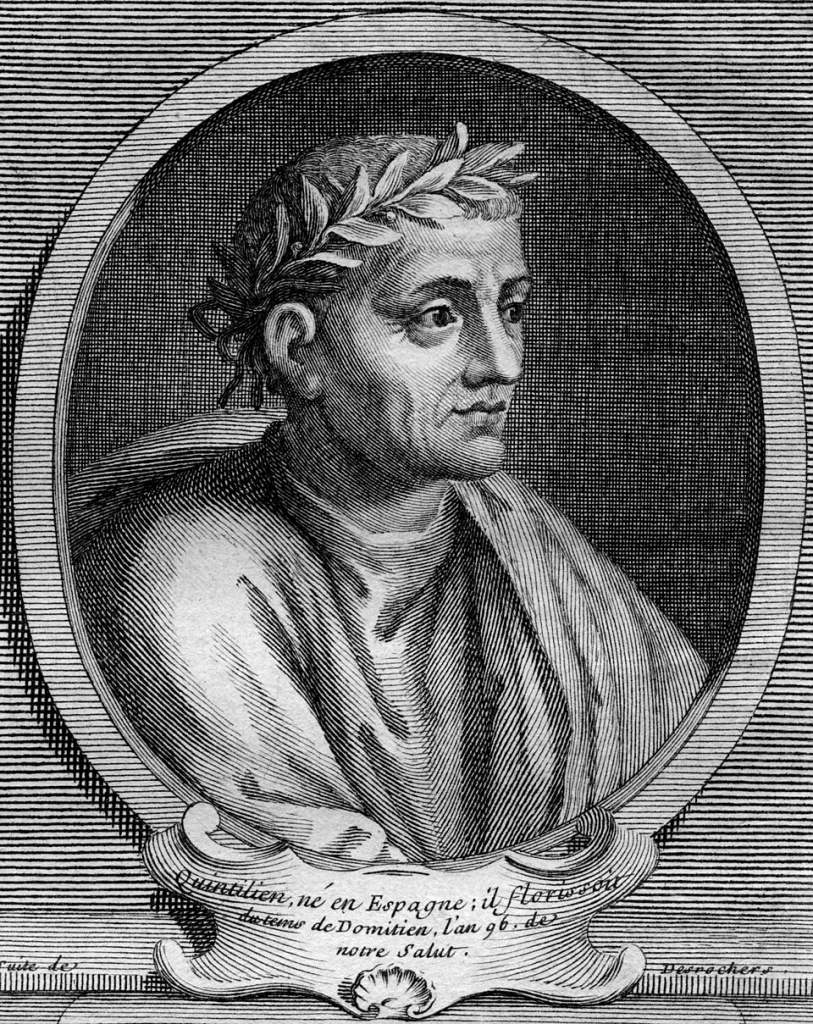
Roman Rhetorician
vir bonus dicendi peritus
Quintilian6Marcus Fabius Quintilianus, known as Quintilian, Roman Rhetorician and Educator defined Rhetoric (and by extension writing) as:
“A good man speaking well.”
Do your best. And do it a lot.
Remember that Shakespeare wrote 38 plays and over 150 poems3. Emily DIckenson write nearly 1800 poems4.
That is over 800,000 words from Shakespeare5, not including previous drafts.
“We dont have many jokes tho’ now, it is pretty much all sobriety, and we do not have much poetry, father having made up his mind that its pretty much all real life. Fathers real life and mine sometimes come into collision, but as yet, escape unhurt.”
Emily Dickinson to Austin Dickinson
December 15, 1851 4
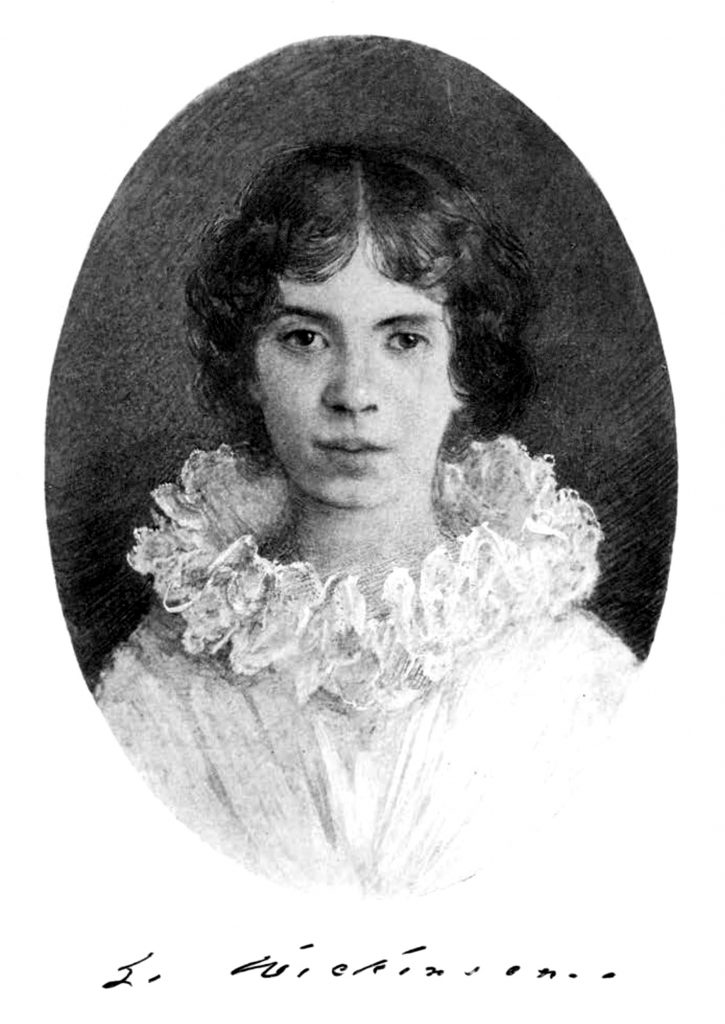

etching based on an authentic photo. This image was edited and retouched by the artist Laura Coombs Hills for Emily’s niece.9
I have learned that to make it in this industry, you actually need 15 or 20 books just to go full time.
And if quality comes from quantity, than this is a synergistic endeavour.
The Great Novel.
Maybe I can shelf a “great novel” until I am able to write it to its greatest potential. It is good advice. But until then, I have a lot more to work on.
I have a completed draft of Alice and Finch waiting for edits. I have a second novel that is 20k words in, and a third 5k in. Though that is on hold so I can focus.
My current goal is to refine and serialize the 80k novel, as well as serialize the project that is at 20k right now. Eventually, they can be moved to Kindle Unlimited after completion, where I can get paid by Kindle per page read.
That’s a pretty exciting prospect, and it’s actually how many modern independent authors make their living, at least initially. You do get locked into the KU ecosystem, and some chose to take them off of that platform as well in favour of publishing wide, but that is a separate conversation.
For now, I hope you can see that I have plans and aspirations.
And a hefty 100 000+ words to work with, and aims of spiritual revisions.
Let’s see where this goes.
Works Cited
- Murdock, David. “On the Great American Novel.” Gadsden Times, The Gadsden Times, 13 Jan. 2019, https://www.gadsdentimes.com/story/lifestyle/columns/2019/01/13/david-murdock-on-great-american-novel/6309224007/. Accessed 17 Mar. 2026.
- There is no source. This is one of those sayings that we don’t truly know from whence it stems.
- American Players Theatre. “William Shakespeare.” American Players Theatre, www.americanplayers.org/about/people/william-shakespeare. Accessed 17 Mar. 2026.
- Emily Dickenson Museum. “Poetry.” Emily Dickenson Museum, https://www.emilydickinsonmuseum.org/emily-dickinson/poetry/. Accessed 17 Mar. 2026.
- Folger Shakespeare Library. “Frequently asked questions about Shakespeare’s works.” Folger Shakespeare Library: The Folger Shakespeare. https://www.folger.edu/explore/shakespeares-works/frequently-asked-questions/. Accessed 17 Mar. 2026.
- Quintilian. “General Introduction.” The Orator’s Education, Volume I: Books 1-2. Edited and translated by Donald A. Russell. Loeb Classical Library 124. Cambridge, MA: Harvard University Press, 2002. https://www.loebclassics.com/view/LCL124/2002/pb_LCL124.5.xml. Accessed 17 Mar. 2026.
Images - William Shakespeare:
https://commons.wikimedia.org/wiki/File:William_Shakespeare_MET_DP860174.jpg - Marcus Fabius Quintilianus:
https://commons.wikimedia.org/wiki/File:Marcus_Fabius_Quintilianus_(par_Jehandier_Desrochers)_(cropped).jpg - Emily Dickinson: https://commons.wikimedia.org/wiki/File:The_Life_and_Letters_of_Emily_Dickinson_-_Frontispiece.png
Author’s Notes (ignore this).
Suggestions:
Layer in universality: life as a book we author, experiences imprinting the soul like drafts awaiting edit (echoing Kabbalistic views on the afterlife’s refinement).
Leave a Reply